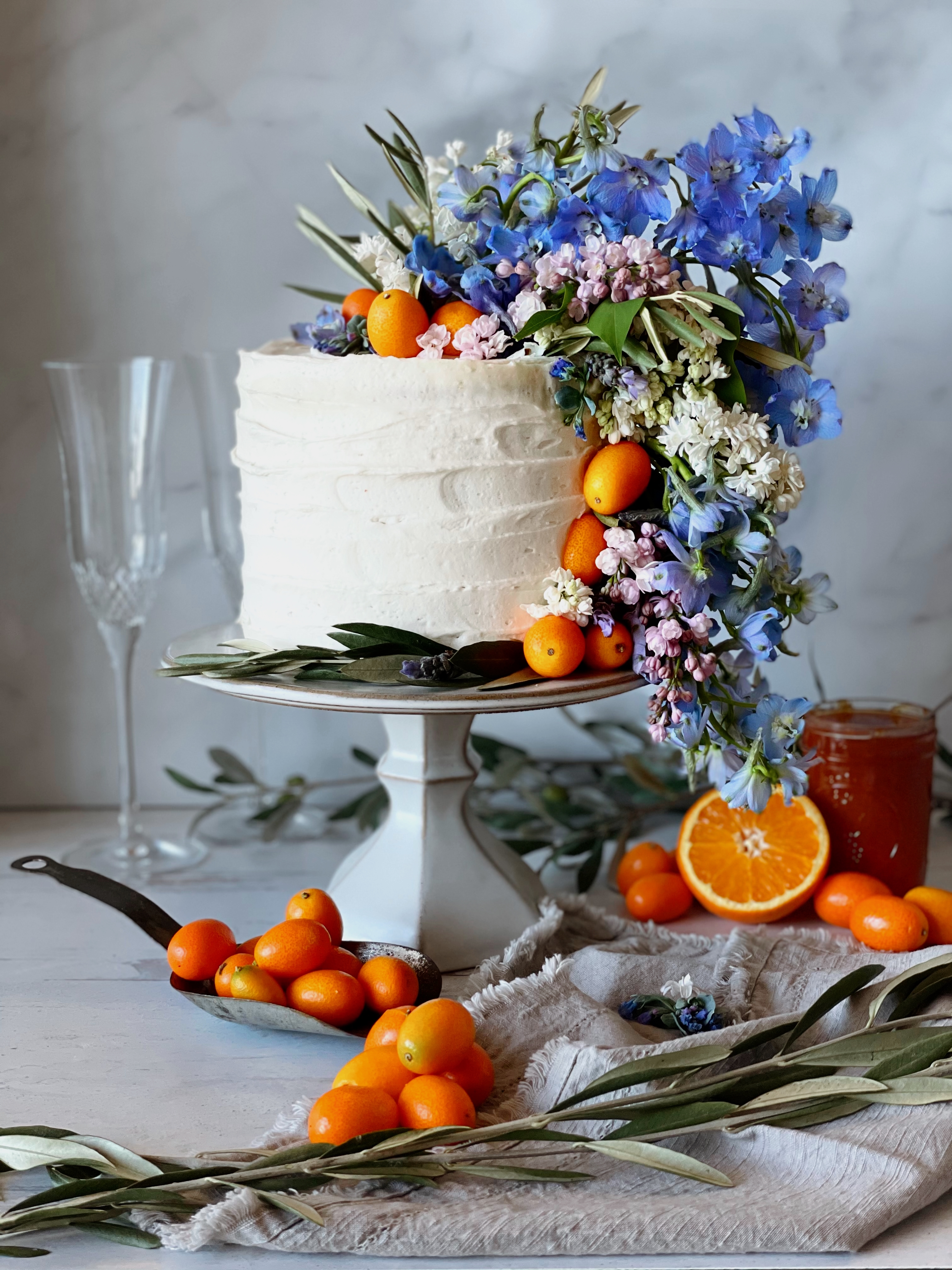
Kumquat Brown Sugar Tea Cake + Ginger Mascarpone Frosting + Kumquat Marmalade + Fresh Kumquats
Ingredients
Brown Sugar Tea Cake:
- 4 cups cake flour organic
- 4 tsp baking powder
- 1/2 tsp Himalayan sea salt
- 5 tsp Earl Grey tea leaves finely ground
- 1-1/2 cups Myokos oat butter softened, can use regular
- 1 cup brown sugar organic
- 1/2 cup coconut sugar
- 2 tsp vanilla bean paste
- 2 brown eggs large
- 4 egg whites
- 1-1/2 cups oat milk
Ginger Mascarpone Frosting:
- 8 oz Mascarpone cheese 1 tub
- 8 oz cream cheese room temperature
- 2-1/2 cups powdered sugar
- 3 tbsp coconut cream full fat
- 1 tsp vanilla extract organic
- 3 tbsp crystallized ginger
- 1/2 tsp Himalayan sea salt
Kumquat Marmalade:
- 1 cup kumquats seeded and sliced
- 1/2 cup cane sugar or coconut sugar organic
- 1/2 tsp grated ginger fresh
- 1 tsp vanilla extract
- 1/2 tsp cinnamon
- 1/4 tsp Himalayan sea salt
- 1/3 cup water
Instructions
- 4 layer, 8-inch cakePreheat Oven to 350 degrees.Grease cake pans with nonstick coconut oil.
Brown Sugar Tea Cake:
- Sift the cake flour, baking powder, sea salt, and Earl Grey tea leaves.Using an electric mixer, cream the oat butter, brown sugar and coconut sugar until creamy.Add the eggs and egg whites, one at a time, beating for several minutes in between. Add in vanilla bean paste.Gently, add in half of the flour mixture, beat on low speed and then add in half of the oat milk. Repeat until it is all mixed together. Bake for 25-30 minutes, or until a toothpick inserted into the middle of a cake comes out clean.
Ginger Mascarpone Frosting:
- Using an electric mixer, beat the mascarpone, cream cheese, powdered sugar, coconut cream, vanilla bean paste, and sea salt together until light and fluffy. Stir in the crystallized ginger.
Kumquat Marmalade:
- Add the kumquats, cane sugar, grated ginger, vanilla, cinnamon, sea salt, and water to a bowl. Let the kumquats soak for 20 minutes, then pour the mixture into a saucepan and bring to a boil. Reduce the heat and simmer for 20 minutes. It should have a thick consistency, similar to jam. Let cool. To decorate the cake, generously frost each layer with the ginger mascarpone and add a spoonful of marmalade between each layer. Top with fresh kumquats and your favorite bright springtime flowers!
Notes
Kumquats are the smallest citrus in the world and they’re the only one you can eat completely. Skin and all!
A few varieties are in season from November to January and other varieties from December to April but the peak months to find them are February and March.